
A lot of “custom” sportswear starts with a factory-made blank garment. Someone buys a stock jersey or polo in bulk, then adds a logo, a name, a number. It’s fast and it’s cheap, and for a one-off event shirt it’s often the right call.
It’s the wrong call for a team kit that needs to survive a full season, because a blank was patterned for nobody in particular. The armholes, the collar drape, the way the fabric moves across the shoulders when someone reaches to catch a ball: all of that was decided by whoever designed the blank, for a generic body and a generic sport.
What patterning from scratch changes
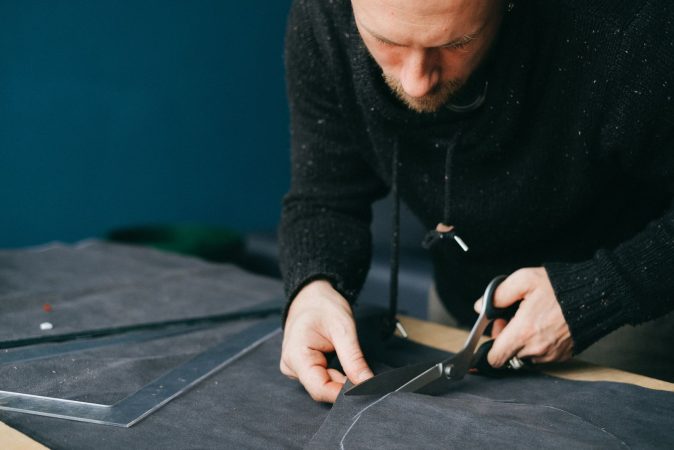
We build every garment from a pattern instead. That starts with a pattern maker translating your spec sheet, sport, position needs, fit preference, size run, into a set of panels cut specifically for that garment. Goalkeeper jerseys get reinforced elbows and a longer hem. Track singlets get a narrower cut through the torso and wider armholes for range of motion. Basketball shorts get a different rise depending on whether the team wants a slim or relaxed silhouette. None of that is possible when you’re decorating something that already exists.
Why seams and panels matter more than they seem to
Cutting from scratch also means we control the seams. A flatlock seam that sits wrong on a blank can chafe for an entire season; on a garment we’ve patterned ourselves, seam placement is one of the first decisions, not something you inherit. The same goes for panel construction: mesh inserts under the arms, four-way stretch through the sides, a heavier weight across the chest where a crest gets stitched or sublimated. Each panel can be a different fabric, cut to a different grain, because we’re not limited to the shape of a blank.
When a blank is still the right answer
The cost of this approach is time. A cut-and-sew order takes longer to sample than decorating stock, because there’s a pattern to draft and a fit sample to approve before we cut the full run. For a team ordering thirty kits, that extra week at the front end is usually worth it. For a five-piece order needed by Friday, a blank might genuinely be the better answer, and we’ll tell you when that’s the case.